
22July 2026
Furniture assembly service usually costs anywhere from about $40 for a simple item to well over $1,000 for large, complex projects. In my professional experience as a handyman and furniture assembler, the real answer depends less on the number of pieces and more on the time, access, and complexity involved.
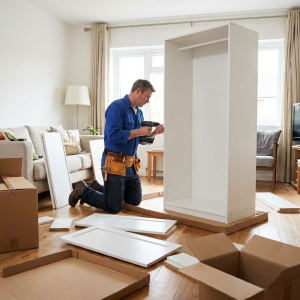
A small nightstand is a very different job from a full-wall IKEA PAX wardrobe, even if both are technically “one item.” That’s why furniture assembly pricing can feel confusing to homeowners who only see the product photo and not the labour behind it.
What Furniture Assembly Usually Costs
Here’s the simple way I’d explain it from the field: basic furniture items are usually inexpensive, while large, complicated, or safety-related jobs move up fast.
Common price ranges I’ve seen in North America include:
-
IKEA nightstands and side tables: $40–$80 each.
-
Dining chairs: $15–$40 per chair.
-
Coffee tables: $50–$120.
-
TV stands and entertainment units: $80–$250.
-
Basic office desks: $80–$180.
-
Executive or L-shaped desks: $150–$400.
-
Office chairs: $30–$100.
-
Bookcases and shelving units: $60–$200.
-
IKEA MALM-style dressers: $100–$250.
-
Large chest of drawers: $150–$350.
-
Twin or full beds: $100–$200.
-
Queen or king beds with storage: $150–$400.
-
Bunk beds and loft beds: $250–$600.
-
IKEA PAX wardrobes: $250–$800+ depending on size and setup.
-
Standard wardrobes and armoires: $150–$500.
-
Sectional sofas: $75–$250.
-
Sleeper sofas: $100–$300.
-
Outdoor patio sets: $100–$500.
-
Gazebos and pergolas: $500–$2,500+.
-
Fitness equipment: $150–$800.
-
Children’s furniture such as cribs and playsets: $80–$600.
Those ranges can vary by city, stairs, parking, wall anchoring, and whether the assembler is also handling moving, cleanup, or disassembly.
Why Some Jobs Cost More
The biggest pricing factor is almost always labour time. But in real life, labour time is affected by more than just how many screws are involved.
The main things that increase the price are:
-
Large or complex furniture.
-
Wall mounting or anchoring.
-
Stairs and difficult access.
-
Missing, damaged, or incorrect parts.
-
Furniture that is still boxed up and not staged.
-
Poor instructions or low-quality manufacturing.
-
Disassembly or removal of old furniture.
-
Same-day or urgent scheduling.
-
Parking problems in condos or busy neighborhoods.
-
Extra modifications like drilling, trimming, or leveling.
I’ve seen customers assume a wardrobe would take “a couple of hours” when it was really a half-day job. That happens a lot with IKEA PAX systems, bunk beds, Murphy beds, large office setups, and outdoor furniture sets with many small parts.
What Customers Usually Underestimate
From my experience, the most underestimated part of furniture assembly is not the assembly itself, but everything around it.
People often don’t realize:
-
How long large wardrobes really take.
-
That wall anchoring may be required for safety.
-
How much stairs add to the job.
-
How much time is lost if the room is cluttered.
-
How long packaging cleanup takes.
-
How dramatically furniture quality affects assembly time.
-
How much a few last-minute add-ons can change the scope.
A customer might say, “It’s just a TV stand,” and then it turns out to be a full entertainment wall unit with doors, lighting, and anti-tip anchoring. That kind of surprise is exactly why good furniture assemblers ask for photos and product links before quoting.
Real Job Examples From the Field
One of the biggest lessons I’ve learned is that furniture assembly pricing can change a lot once the actual item is in front of you.
Here are a few real-world examples that show why:
IKEA PAX Wardrobe
A customer expected to pay around $250–$300 for a wardrobe. When I arrived, it was actually a full wall-length PAX system with multiple frames, sliding doors, drawers, shelves, and wall anchoring.
What looked like a small job turned into a 7–9 hour project, and the final price ended up around $700–$900.
Home Office Setup
A customer provided the exact product links for an L-shaped desk, office chair, and bookshelf. Everything was delivered to the room and already unpacked.
Because the scope was clear, the job went faster than expected, and the final price came in lower than the original $350 quote.
Bunk Bed Assembly
A bunk bed quote started at $250, but the job became more complicated because the bed was on the third floor, several hardware bags were missing, and the customer wanted extra anchoring for safety.
That pushed the final price to around $450–$500.
Patio Furniture Set
A customer assumed an outdoor set would cost around $100–$150 because “it’s just patio furniture.” But the set included a dining table, eight chairs, a fire table, and dozens of parts.
The actual job landed in the $350–$600 range.
Multiple Furniture Items After a Move
A move-in job was originally quoted at about $1,200 for 12 items. But several pieces had already been partially assembled, and family members helped unpack and stage everything.
Because the labour was lighter than expected, the final price dropped to roughly $900–$1,000.
TV Stand Turned Entertainment Center
A customer expected to pay about $100 for a TV stand. Once I saw the product, it was actually a large entertainment wall unit with lighting, cabinets, and anchoring requirements.
That changed the job to around $300–$450.
These examples show the same pattern over and over: generic descriptions create pricing surprises, while exact product links and photos usually lead to more accurate quotes.
Flat Rate vs Hourly Pricing
From a handyman’s perspective, I think flat-rate pricing works best for most furniture assembly jobs.
Hourly pricing has its place, especially when the scope is unclear or the job may turn into troubleshooting. It’s also useful for disassembly, repairs, and jobs with a lot of unknowns. But customers usually dislike not knowing the final bill.
Per-item pricing is easy to understand and works well for standard furniture. The weakness is that two items that look similar can take very different amounts of time.
Flat-rate project pricing is usually the best overall option because it gives the customer certainty and rewards the assembler for being efficient. In my view, the best setup is flat rate with a clearly defined scope and change-order pricing for extras.
That approach works well because it avoids billing disputes and protects both sides.
How Customers Can Save Money
The easiest way to save on furniture assembly is to reduce the extra work that has nothing to do with actual assembly.
Here’s what usually helps most:
-
Have all boxes delivered to the correct room.
-
Send product links before getting a quote.
-
Bundle multiple items into one visit.
-
Clear the assembly area ahead of time.
-
Make sure all boxes and parts have arrived.
-
Book in advance instead of requesting urgent service.
-
Decide on add-ons before the appointment.
-
Ask whether the assembler prefers unopened boxes or pre-opened hardware.
-
Combine furniture assembly with other handyman tasks when possible.
-
Avoid choosing the cheapest quote without checking experience.
In my experience, homeowners can often save 10–30% or more just by making the job easier to quote and faster to complete.
The Biggest Money-Saving Tip
If I had to give one simple piece of advice, it would be this: provide clear photos and product links, then bundle as much work as possible into one visit.
That gives the assembler enough information to quote accurately, bring the right tools, and plan the job properly. It also reduces the chance of surprises, which is where most pricing complaints begin.
The cheapest job is rarely the one with the lowest initial quote. The cheapest job is the one that gets done right the first time, without delays, missed parts, safety issues, or return visits.
Final Thoughts
Furniture assembly service costs vary because the real product being sold is labour, skill, and problem-solving, not just putting parts together. A simple chair is one thing, but a wardrobe, bunk bed, or closet system can become a serious installation project.
If you’re hiring a furniture assembler, the best way to get a fair price is to be specific, prepared, and realistic about the scope. If you’re writing about this for homeowners, that honest perspective is what will make the post valuable.
A lot of people think furniture assembly is a commodity. It isn’t. The difference between a cheap job and a good job is often experience, communication, and knowing what can go wrong before it does.
One Reply to “How Much Does Furniture Assembly Service Cost?”