
15November 2026
Fence Repair in Oakville: What Freeze-Thaw and Mature-Tree Roots Do to Backyard Fences Over Winter
A backyard fence in Oakville rarely fails all at once. It leans a little after one winter, a little more after the next. A gate that closed cleanly in October needs a lift and a push by March. One panel feels loose when you lean on it, and the post at the corner moves in its hole when you shake it.
Most homeowners notice it in spring, but the damage is done in winter. Two things do most of it here: freeze-thaw in the ground, and the roots of the mature trees that make so many Oakville streets feel settled and green. Understanding how each one works helps you tell a simple repair from a section that needs rebuilding — and helps you catch the cheap fix before it becomes the expensive one.
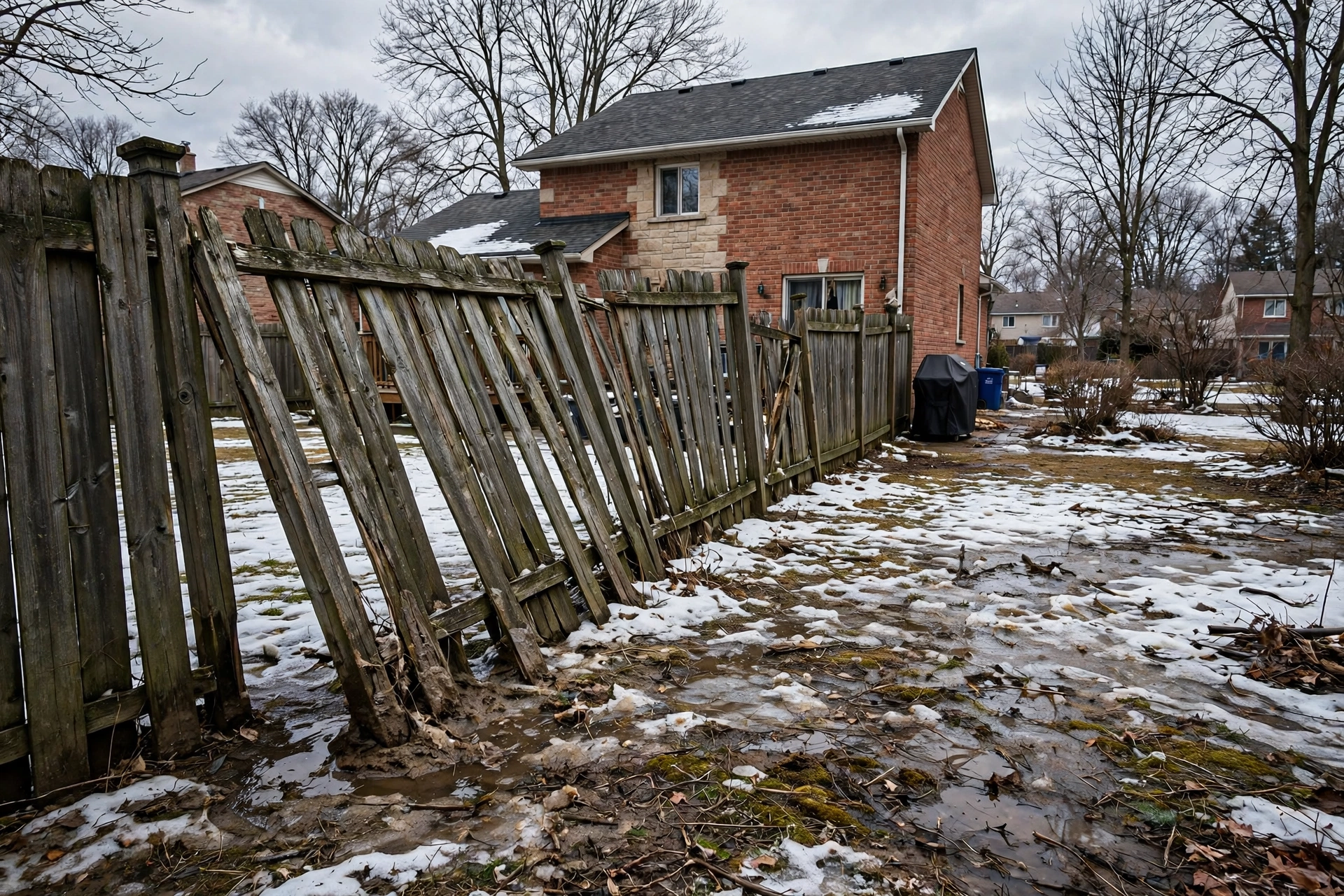
How freeze-thaw moves a fence post
Oakville sits in clay-heavy soil in many neighbourhoods, and clay holds water. In late fall, rain and melting snow soak into the ground around a fence post. When the temperature drops below freezing, that water expands as it turns to ice. It pushes up and out. When it thaws, the soil settles back, but not always to the same place, and a small gap is left around the post.
Do that twenty or thirty times in one winter — a cold snap, a thaw off Lake Ontario, another freeze — and the post works loose. This is called heaving. The post may lift a few centimetres, tilt toward the side with less support, or start to rock. Once a post rocks, every wind gust works it further. By spring the lean is visible from the house.
Homes in Glen Abbey and River Oaks see a lot of this. Those subdivisions were built in the 1980s and 1990s, and many of their fences are now on their second or even third decade. The posts have been through hundreds of freeze-thaw cycles, the wood at ground level has softened in places, and the soil around them has been loosened many times over. Clearview and College Park, with homes of a similar age, show the same pattern — a fence that looks fine from a distance but moves when you put a hand on it.
Newer areas are not immune. In Joshua Creek and Glenorchy, north of Dundas, the fences are younger, but the soil is still clay in many lots, grading is still settling, and a shallow-set post in a new build can heave in its first few winters. The difference is timing: in a newer home the fix is often re-setting one or two posts early, before the lean pulls the panels out of line.
Snow makes it worse in a quiet way. A drift piled against one side of a fence adds weight and keeps that side wetter longer in the thaw. A fence along a driveway where snow is piled, or below a roofline where meltwater drips, takes more cycles than a fence in the middle of a dry yard.
What mature-tree roots do along the fence line
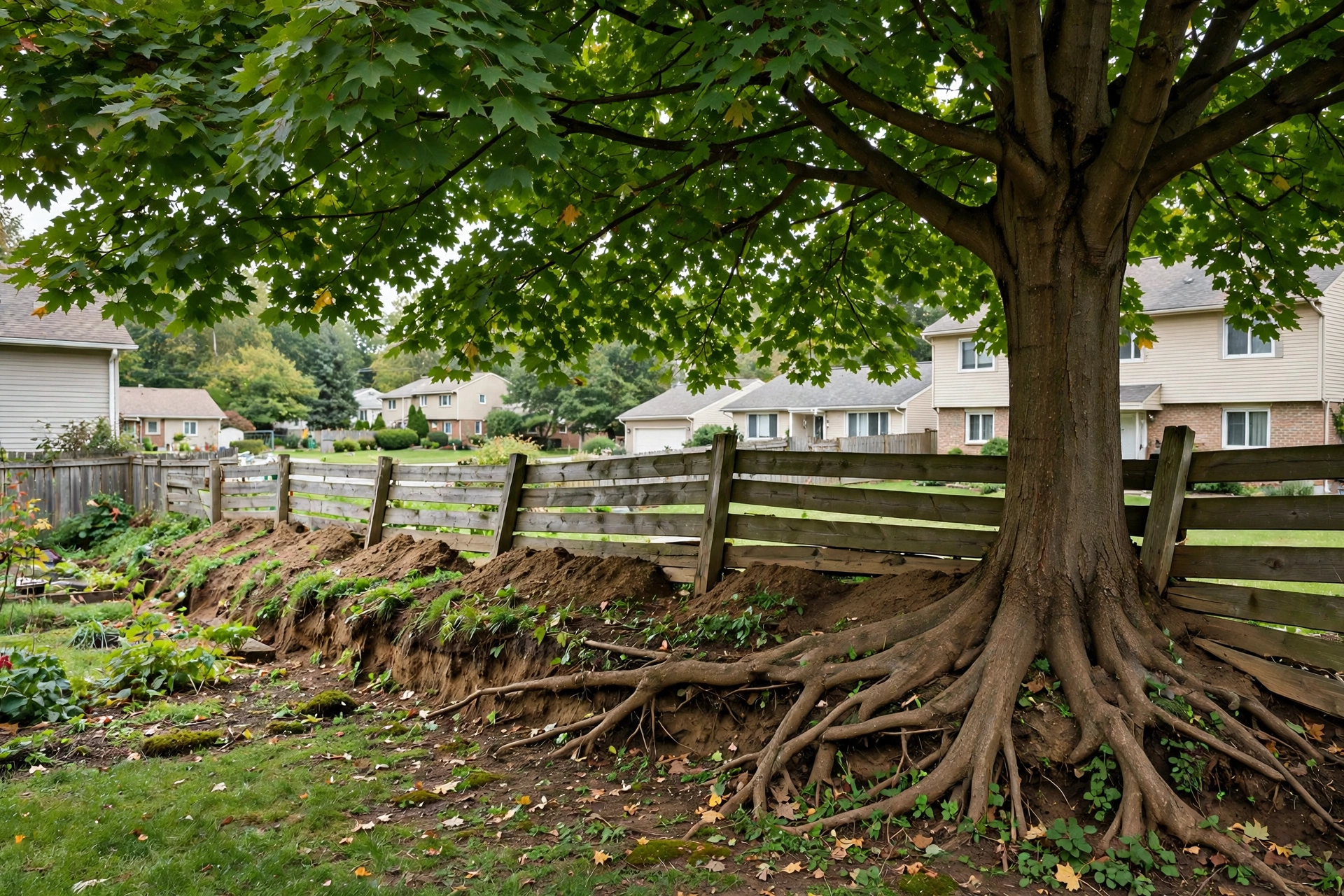
The second cause is slower and easier to miss. Oakville is proud of its tree canopy, and neighbourhoods like Old Oakville south of Lakeshore, Bronte Village, Glen Abbey along the ravine edges, and the older streets in Clearview have large maples, oaks, and other mature trees whose roots run well beyond the trunk — often right along or under the fence line, where the soil is less compacted and water collects.
Roots do not usually break a fence in one season. They grow in thickness year by year. A root that passes beside a post pushes it a fraction off plumb. A root that runs under a bottom rail lifts it. A root that grows against a panel from the neighbour’s side bows the boards. Because the change is gradual, homeowners often blame wind or age, when the real cause is visible at ground level if you look: a raised line of soil along the fence, a post that leans away from a nearby tree, or a panel that is higher on one end than the other.
Roots also lift and crack the soil around a post, which lets more water in — and that feeds the freeze-thaw problem. The two causes work together. A post loosened by roots heaves more easily in winter, and a heaved post leaves more room for roots and water to get in the next year.
Cutting a large root is not a casual fix. A major root can matter to the health and stability of the tree, and in some cases tree work needs care or permission. A good fence repair works around this: re-setting or replacing a post a short distance from a large root, adjusting a panel line slightly, or using a repair that strengthens the post without a fight against the tree. The goal is a straight, solid fence that can live beside the tree, not a contest the fence will lose again in three years.
Signs your fence needs repair — a walk you can do in ten minutes
Walk your fence on a calm day and check each post and gate. You do not need tools for this first check.
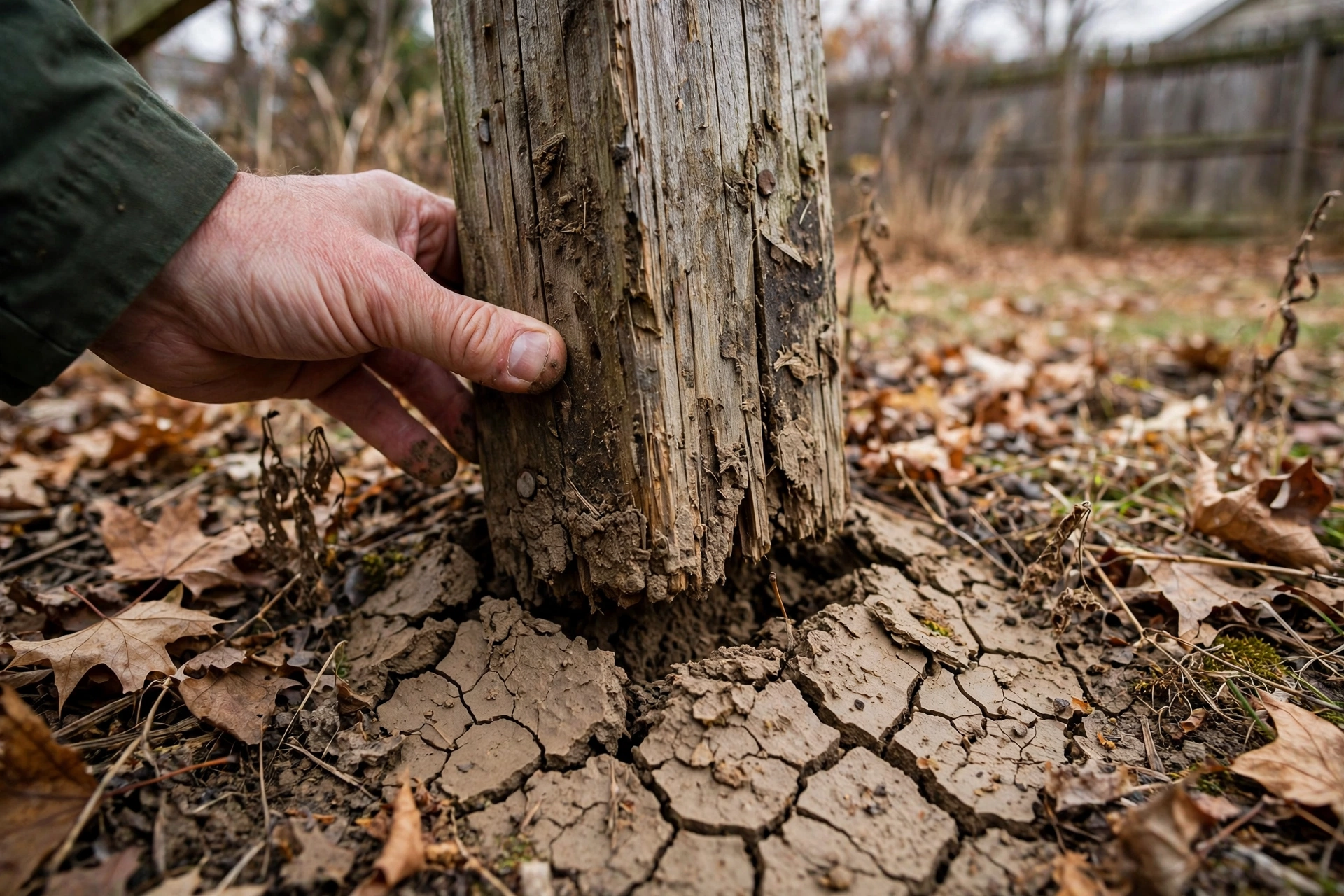
Start with the posts. Put a hand on each one at about shoulder height and push gently. A sound post feels solid and does not move in the ground. A post that rocks, even a little, has lost its hold — that is heave, rot at the base, or both. Look at the base: wood that is dark, soft, or crumbling where it meets the soil is past sealing and needs attention. Check the line of the fence from one end: one post out of line usually explains a whole panel looking crooked.
Next, look at panels and boards. Loose boards, boards that have popped their nails or screws, and panels that rattle are often a result, not the cause — the post moved and pulled the fasteners with it. Re-nailing a board without fixing a moving post does not hold for long.
Then test every gate. A gate should swing freely and latch without lifting, pushing, or kicking. If you now have to lift the gate to close it, the post it hangs from, the post it latches to, or both have moved. Gate posts take the most strain of any part of a fence because the gate’s weight pulls on them every day, so they are often the first to lean.
Finally, look along the ground. Raised soil, roots visible at the surface near a post, gaps under a panel where soil has washed away, and low spots where water pools against the wood all tell you where the next problem is coming from.
Write down which posts move, which panels are loose, and which gate sticks. That short list is exactly what makes a repair quote clear.
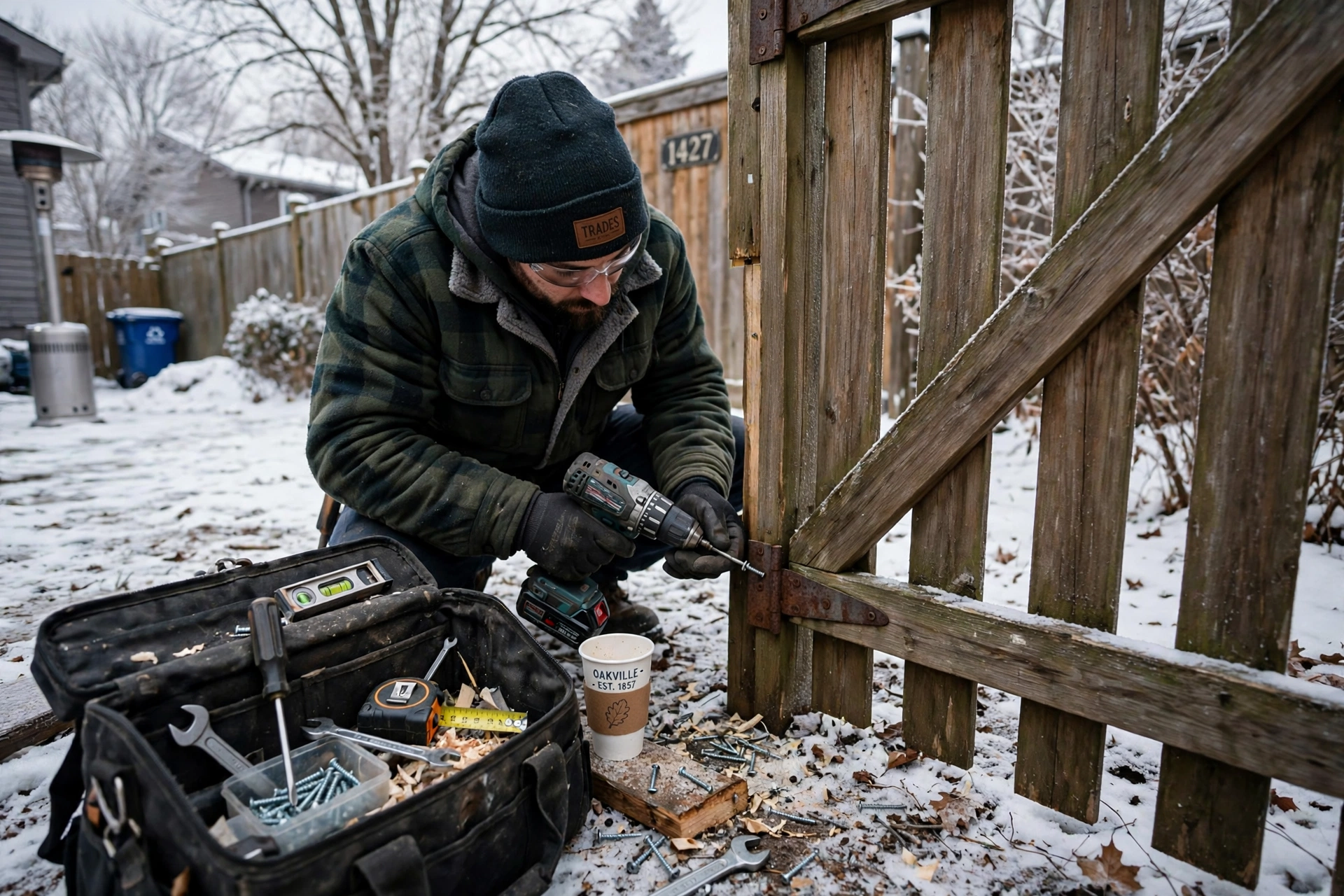
What a fence repair actually covers
A repair is not always a new fence. In many Oakville yards, most of the fence is still sound and only a few parts need work. For what is involved post by post, see the fence repair page.
A typical repair can include:
- Re-setting or replacing heaved posts — digging out a loosened post, clearing the failed soil or broken footing, and setting it plumb and solid again, or replacing it if the base has rotted. Getting the depth and the packing right is what stops the same post heaving again next winter.
- Straightening a leaning section — bringing a run of fence back to line once its posts are solid, and re-securing the panels to them so the whole section moves as one piece again.
- Replacing damaged boards and rails — swapping out split, rotted, or bowed boards and the rails behind them. This is where carpentry work overlaps with fence work: sound rails are what boards fasten to, and replacing a rail at the same time as boards saves opening the panel twice.
- Gate repair and re-hanging — squaring the gate, replacing worn hinges or a latch that no longer lines up, and in some cases adding a brace so a wide gate stops sagging. A gate that latches cleanly is also a safety point for homes with children or dogs.
- Bracing as a short-term hold — in some cases a brace can steady a post through a season. It is worth being honest about this option: a brace is a hold, not a fix, and it makes sense when you are planning a larger yard project soon. If the post base is rotted, bracing only delays the replacement.
What a repair does not do is make rotted wood sound again. If most posts in a long run are soft at the base, replacing them one call at a time costs more in the end than rebuilding that run once. A straight assessment will tell you which side of that line your fence is on — many Oakville fences are a clear repair, with two or three bad posts in an otherwise good fence.
What affects the cost — without guessing at a price
This post does not put a number on fence work, because every yard is different. What affects the cost is plain:
- How many posts need re-setting or replacing, and how deep the damage at the base goes.
- Access — a wide side yard is simple; a tight lot in Old Oakville or Bronte with planting beds, a shed, or a pool along the fence line takes more time and care.
- Tree roots — working around a large root takes longer than a clear dig, and sometimes changes where a post can go.
- Length of the affected run — one corner post is a small job; a full side that has leaned together is a larger one.
- Gates — a gate that needs new hardware and re-hanging adds to a post job, but doing it at the same time is cheaper than a second visit when it stops latching entirely.
If your fence shares a line with a neighbour, a short conversation before work starts helps. Many Oakville fence repairs go smoothly when both sides agree on the line and the scope first.
When to book it
The best time to look is late fall and early spring. In late fall, you can see which posts are already loose before winter works them further, and a solid post going into winter comes out straighter in spring. In early spring, the winter’s damage is fully visible and the ground is workable — and you get the repair done before you are trying to use the yard, let a dog out through a gate that will not latch, or have neighbours over with a fence leaning into the garden.
You do not have to wait for a panel to fall. A post that rocks today is the cheapest version of this repair. The same post after another winter of freeze-thaw, with two panels pulled loose and a gate frame twisted, is a bigger job in every way.
Book a fence check in Oakville
If your walk found posts that move, a gate you have to lift to close, or a section leaning a little more than it did last spring, call 289-207-6699 or send a message through the contact page to book a visit. Fence repair, post re-setting, and gate fixes can be covered together, so your backyard is solid and private again before the next winter does more work on it.