
7September 2026
If you’re wondering how long your fence should last, the short answer is: it depends far more on installation, drainage, and maintenance than on the material alone. In Oakville’s climate, a well-built and well-maintained wood fence typically lasts 15 to 25 years, but I’ve seen neglected ones fail in under 10 and carefully cared-for ones go much longer.
As a local handyman who regularly inspects, repairs, and installs fences in Oakville neighbourhoods, I want to share what actually determines fence lifespan here, not just textbook ranges, but the on-the-ground factors I see every week.
Typical Fence Lifespans in Oakville’s Climate
When homeowners ask me for ballpark numbers during an on-site visit, I give them these ranges as a starting point:
-
Wood (pressure-treated or cedar): 15–25 years on average, with posts often being the limiting factor
-
Vinyl: 20–30+ years, though impact damage and lower-quality panels can shorten this
-
Aluminum: 30–50+ years, with gates and hardware usually needing attention before the panels themselves
-
Chain-link: 15–30+ years, heavily dependent on post stability and coating quality
These aren’t guarantees. A 12-year-old wood fence with solid posts, good drainage, and regular upkeep can easily outlast a 7-year-old fence that was installed too shallow or sits in constantly wet soil.
Why Wood Fences in Oakville Usually Fail Before Their Time
In my experience, wood fences here don’t fail because the boards rot through first, they fail because the posts do. The most common reasons I see wood fences needing major repair or replacement include:
-
Post rot at ground level: Constant moisture exposure where the post meets the soil is the single biggest killer. Water collects, wood stays damp, and rot sets in from the inside out.
-
Frost heave and soil movement: Oakville’s freeze-thaw cycles shift soil around posts. If posts weren’t set deep enough or lack proper concrete support, they gradually lean or lift.
-
Poor drainage: Water pooling around the fence line accelerates rot and destabilizes post footings.
-
Improper installation: Posts set too shallow, inadequate concrete footings, or missing gravel drainage layers lead to premature movement and failure.
-
Deferred maintenance: Ignoring loose boards, small leans, or cracked rails until entire sections become unstable.
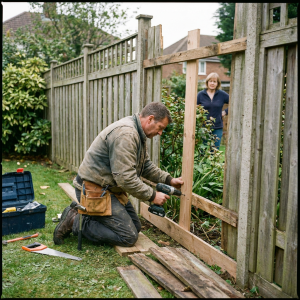
I recently worked on a backyard fence where the homeowner assumed multiple panels needed replacing because a whole section had started leaning. The boards and rails were actually in good shape. The real issue was one rotted post at ground level, worsened by water collecting around the base and seasonal frost movement. I removed the failed post and old concrete, corrected the drainage, installed a properly supported replacement post, and reattached the existing rails and panels. The homeowner saved hundreds by repairing instead of replacing, and the fence now has many more years of life.
Maintenance Habits That Actually Extend Fence Lifespan
Simple, consistent care makes a much bigger difference than most people realize. Here’s what I recommend to Oakville homeowners:
-
Inspect twice a year: Check your fence in spring (after thaw) and again before winter. Look for leaning posts, loose fasteners, cracked rails, and dark or soft areas near the base.
-
Keep the base clear: Don’t pile soil, mulch, leaves, or debris against the bottom of the fence. These trap moisture and accelerate rot right where posts enter the ground.
-
Trim vegetation: Vines and shrubs touching the fence hold moisture against the wood and can hide early signs of trouble.
-
Address small issues early: A loose board or slightly leaning post is inexpensive to fix. Waiting until a whole section is unstable costs far more.
-
Clean and reseal when needed: For pressure-treated or stained wood, apply a quality exterior sealer or stain when the wood starts absorbing water instead of beading it. Don’t seal on a rigid schedule—inspect and act based on condition.
-
Avoid aggressive power-washing: High pressure can damage wood fibres and force moisture deeper into vulnerable areas.
Common Mistakes That Shorten Fence Life
The habits that hurt fences most are often the opposite of good maintenance:
-
Burying the bottom of the fence with mulch or soil to “finish” the look
-
Ignoring standing water or poor grading around the fence line
-
Letting vines grow through or over the structure
-
Waiting until a post is completely rotten before taking action
-
Power-washing too aggressively or too frequently
-
Piling snow against the fence in winter
The One Piece of Advice Most Homeowners Overlook
Here’s the counterintuitive truth: don’t focus all your attention on the fence boards—protect the posts and the ground around them. Most homeowners see weathered or cracked boards and assume that’s the sign of failure. In reality, the posts determine how long the entire structure lasts.
One of the worst DIY habits I see is adding soil or mulch up against the bottom of the fence to make the yard look tidy. It seems harmless, but it keeps the wood constantly damp and speeds up rot right at the most critical point. I’d rather see a small visible gap at the base than have the wood buried.
Also, don’t automatically replace an entire fence just because one section is leaning. Find out why it’s leaning. In Oakville, frost movement, poor drainage, or a single deteriorated post is often to blame. Fix the underlying problem and replace only the failed components, and you can often add years to the rest of the fence.
When to Repair vs. Replace
Not every aging fence needs full replacement. During an inspection, I look at:
-
Post condition: Are they solid at ground level, or soft and cracked?
-
Movement: Is there significant leaning or shifting that suggests footing failure?
-
Drainage: Is water pooling around the fence line or flowing away properly?
-
Board and rail integrity: Are most boards still structurally sound, or heavily rotted?
-
Cost of repair vs. replacement: Sometimes a few post replacements and drainage corrections make more financial sense than a brand-new fence.
A 15-year-old wood fence with solid posts and good drainage might have plenty of life left with targeted repairs. A newer fence with rotten posts or chronic drainage issues might already be approaching major failure.
Final Thoughts
In Oakville’s climate, fence lifespan comes down to three things: quality installation (especially post depth and drainage), consistent maintenance (keeping the base dry and catching small issues early), and smart repairs that address root causes instead of symptoms. If you keep the wood dry, keep the base clear, and inspect regularly, you’ll get far more years out of your fence than the average.
If you’re unsure whether your fence needs repair or replacement, a professional inspection can save you money by identifying exactly what’s failing and what can be saved.