
3August 2026
If your caulk keeps failing, the most common reason is that it was not installed properly in the first place. From an Oakville handyman’s perspective, the real issue is usually poor surface preparation, the wrong product for the job, or normal home movement combined with Ontario’s changing seasons.
Caulk is supposed to act as a protective seal, not just a finishing touch. When it pulls away from the surface, it can let in moisture, cause drafts, and eventually lead to mould, wood rot, or more expensive repairs.
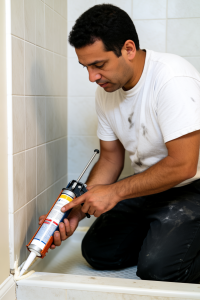
What Caulk Failure Looks Like
The most common caulk problem I see is caulk separating from the surface. That means the bead is no longer bonded tightly to the tub, countertop, window frame, trim, or other joint it was meant to protect.
Homeowners often notice:
-
Gaps forming between the caulk and the surface.
-
Caulk shrinking or pulling back from the joint.
-
Mildew or dirt collecting in the open seam.
-
Cracks, peeling, or sections that lift away easily.
Once that bond is broken, water can get behind the surface and start causing hidden damage.
Where Caulk Fails Most Often
In Oakville homes, there are a few areas I inspect first because they tend to fail more often than others.
Bathtubs and Shower Surrounds
This is one of the biggest trouble spots. The joint where the tub meets the wall is exposed to daily moisture, movement, and cleaning products, all of which can weaken the caulk over time.
Kitchen Countertops and Backsplashes
Caulk often pulls away where the countertop meets the backsplash or wall. Water splashes, grease, and seasonal expansion and contraction can all contribute to gaps forming.
Windows
Interior and exterior window caulking can separate because of freeze-thaw cycles, settling, and temperature swings. Even a small gap can lead to drafts and moisture intrusion.
Exterior Doors and Trim
Door frames and trim take a beating from sun, rain, snow, and temperature changes. As materials expand and contract, the caulk can lose its grip and allow air and water inside.
Bathroom Vanities and Sinks
The seam around sinks and vanities often shows early signs of failure because of repeated water exposure and small amounts of movement during everyday use.
Why Caulk Fails So Often
In my experience, the biggest causes are poor installation and inadequate surface preparation. A lot of failed caulk jobs start with caulk being applied over dirty, damp, or old material instead of a properly cleaned surface.
Another common issue is using the wrong type of caulk for the job. For example, standard acrylic caulk is not the best choice for high-moisture areas like bathrooms or for some exterior applications.
Ontario weather also plays a big role. Homes expand and contract as temperatures change, and that movement puts stress on sealed joints. Add in moisture, aging, and UV exposure outdoors, and even a decent caulk job can fail over time if the conditions are tough enough.
A Real Oakville Example
One bathroom call stands out to me. The homeowner thought the cracked caulk around the bathtub was only a cosmetic issue. When I removed the old caulk, I found water had been getting behind the tub for quite some time.
Fortunately, we caught it before the damage became severe, but there was already moisture behind the wall and early signs of mold. We removed the failed caulk, cleaned and dried the area, treated the affected surfaces, and applied a high-quality mildew-resistant silicone caulk.
That repair saved the homeowner from a much bigger project involving drywall replacement and mold remediation.
I’ve seen the same thing around windows and doors too. In one Oakville home, caulk had pulled away from the window trim and let rainwater seep behind the casing. The homeowner noticed a small stain on the interior wall. We replaced the failing exterior caulk before the moisture caused wood rot or more extensive damage.
That kind of repair is a great example of why caulk is more than a finishing detail. It is a barrier that helps protect the home.
When You Can DIY and When to Call a Handyman
DIY is fine for small, straightforward caulking jobs if you are comfortable doing the prep work properly. The repair only lasts if the old caulk is removed completely and the surface is cleaned and dried before new caulk goes on.
Call a handyman if:
-
Caulk keeps failing in the same area.
-
You see signs of water damage.
-
Mold keeps returning.
-
Drywall or wood feels soft.
-
Multiple windows, doors, or large bathroom fixtures need attention.
Those problems can point to something bigger than a simple cosmetic issue.
When Caulk Needs Immediate Attention
Some signs mean you should not wait. If you notice visible gaps, water getting behind the joint, recurring mildew, drafts around windows or doors, or caulk that is cracked, peeling, or separating, it is time to replace it.
Treating caulk failure early is one of the simplest and most cost-effective ways to protect your home from bigger problems.
My Advice to Oakville Homeowners
My biggest advice is to treat caulk as preventative maintenance, not something you only think about after there is a leak.
Inspect caulking around bathrooms, kitchens, windows, and exterior doors at least once a year, ideally in the spring or fall. Look for gaps, cracks, peeling, shrinking, or any signs that the caulk has pulled away from the surface.
A small maintenance job today can save you from a major repair tomorrow.
Contact today to discuss your caulking project and get a free quote.
One Reply to “Why Does My Caulk Keep Failing?”