
8November 2026
The first real cold night in Oakville rarely arrives with a warning. One week the furnace barely runs, and the next a north wind off Lake Ontario finds every small gap in the house at once. The living room feels fine in the afternoon and chilly by the evening. A bedroom over the garage will not warm up. The front hall is cold every time someone opens the door, and it stays cold long after the door closes.
In most cases that is not a furnace problem. It is a sealing problem — worn weather stripping around doors, and caulking around windows and frames that has cracked, shrunk, or pulled away. Those two small jobs are the heart of winter prep for an Oakville home, and November is the right time to do them, before freeze-thaw turns a small gap into a bigger repair.
This post is about where drafts show up first, especially in Glen Abbey and River Oaks, how to check your own doors and windows in about twenty minutes, and what a proper fix actually involves.
Why Glen Abbey and River Oaks Houses Feel It First
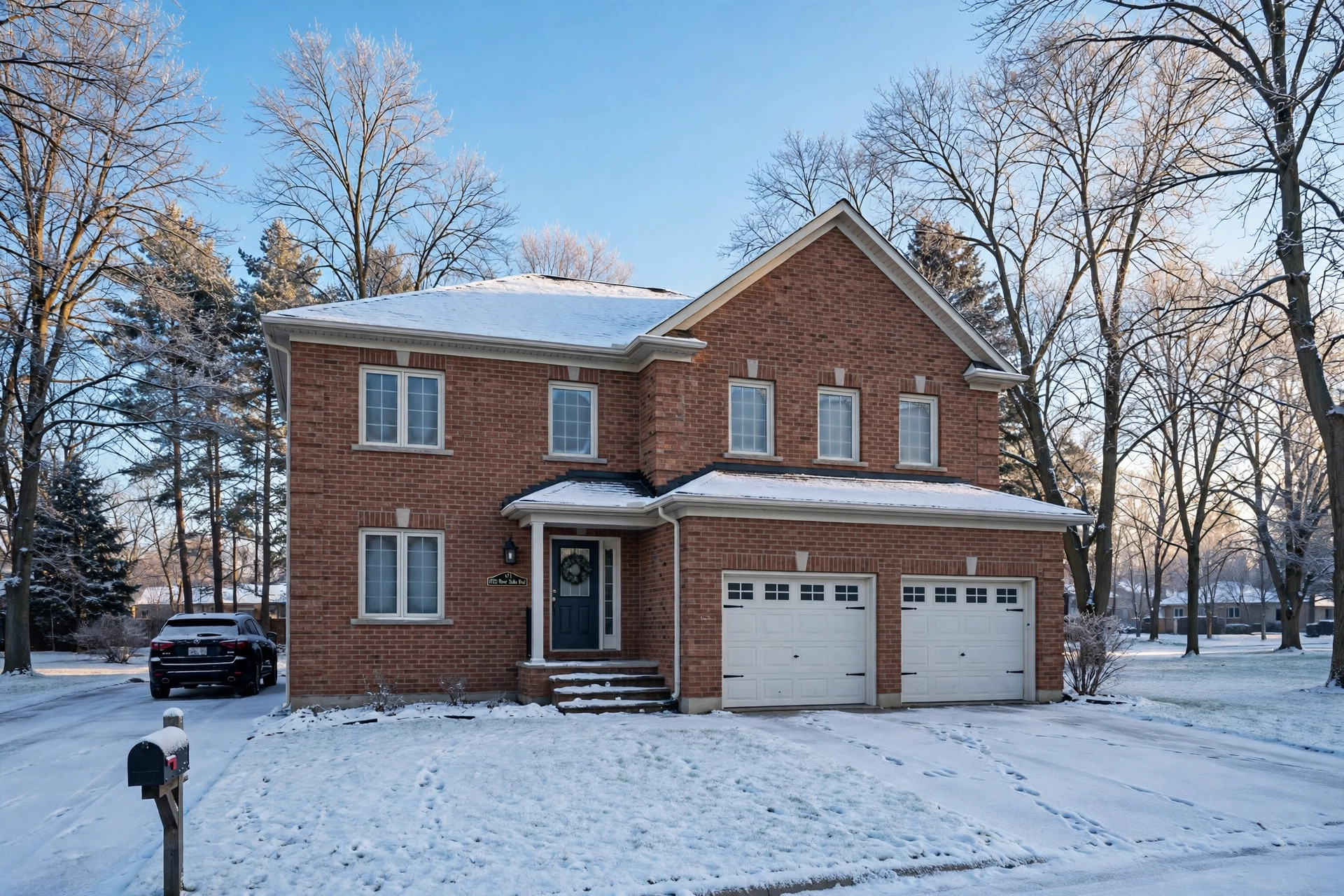
Glen Abbey and River Oaks were built out mostly in the 1980s and 1990s — two-storey brick and siding family homes, many with a bedroom or family room over an attached garage, a two-storey front hall, and a lot of original or once-replaced windows and doors. That age matters in three simple ways.
First, the seals are old. Foam weather stripping that was soft when it went in is now flat and hard. Door sweeps drag or have gaps at the corners. When a seal stops springing back, it stops sealing, even if it still looks present when you glance at it.
Second, the houses have a lot of openings to fail. A front door, a side door into the garage, patio sliders at the back, and often a basement walkout — each one is a frame that can leak air. Add a large number of windows, many of them facing open streets and golf-course or ravine exposure in Glen Abbey, and the wind has plenty of places to test.
Third, rooms over garages show drafts sooner. The floor and the wall shared with the garage are only as warm as the sealing around the garage-side door and the windows above it. If cold air is getting in at those frames, the room above feels it first and longest.
The same pattern shows up elsewhere in Oakville, just with different details. In Old Oakville and Bronte Village, older homes south of Lakeshore often have original doors and windows that have been painted many times, with caulking buried under old layers. In Clearview and College Park, family homes of a similar age to Glen Abbey show the same worn foam and cracked exterior beads. In Joshua Creek and Glenorchy, the houses are newer, but builders’ first seals do not last forever either, and wide doors and large windows still move a little as a new home settles. Wherever you are in town, the check is the same.
A Twenty-Minute Draft Check You Can Do Tonight
You do not need special tools. Wait for a breezy evening if you can, and walk the house slowly.
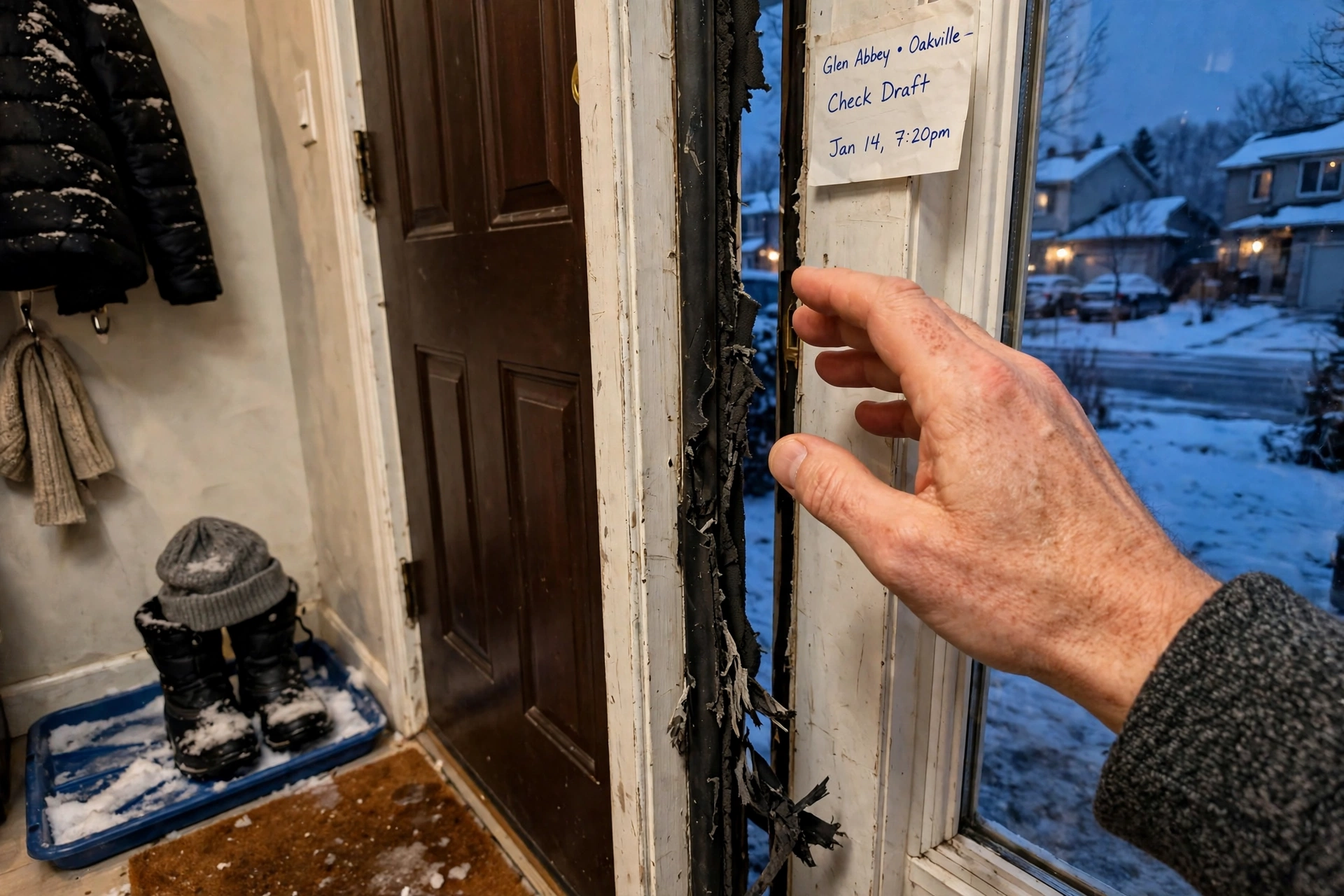
Start at the front door. Run your hand slowly around the frame, close to the edge, without touching it. You will feel moving air where the seal has failed — most often at the top corners and along the side where the latch sits. Close the door on a sheet of paper at a few points around the frame. If the paper pulls out easily with the door shut and latched, that spot is not sealing.
Next, check the door to the garage and any side or back door the same way. Garage doors into the house are easy to forget, and they leak into the hall or laundry room all winter. Look at the sweep at the bottom: if you can see daylight under the door in the daytime, cold air — and garage air — is coming in at night.
Then walk the windows, room by room, especially on the north and west sides and in rooms over the garage. Feel around the frame, not just the glass. Check where the window meets the wall inside, and go outside in daylight and look at the caulking bead where the frame meets brick or siding. Look for cracks running along the bead, sections that have pulled away in a thin line, and spots where the bead is missing altogether.
Finish in the basement. Cold air around basement windows and around the plate at the top of the foundation wall is common, and it makes the floor above feel cold. You may not fix everything down there in one visit, but noting it helps you bundle the work sensibly.
Write down what you find, door by door and window by window. A short list turns a vague “the house is drafty” into a clear set of fixes.
Weather Stripping: The Fix for Doors That Leak
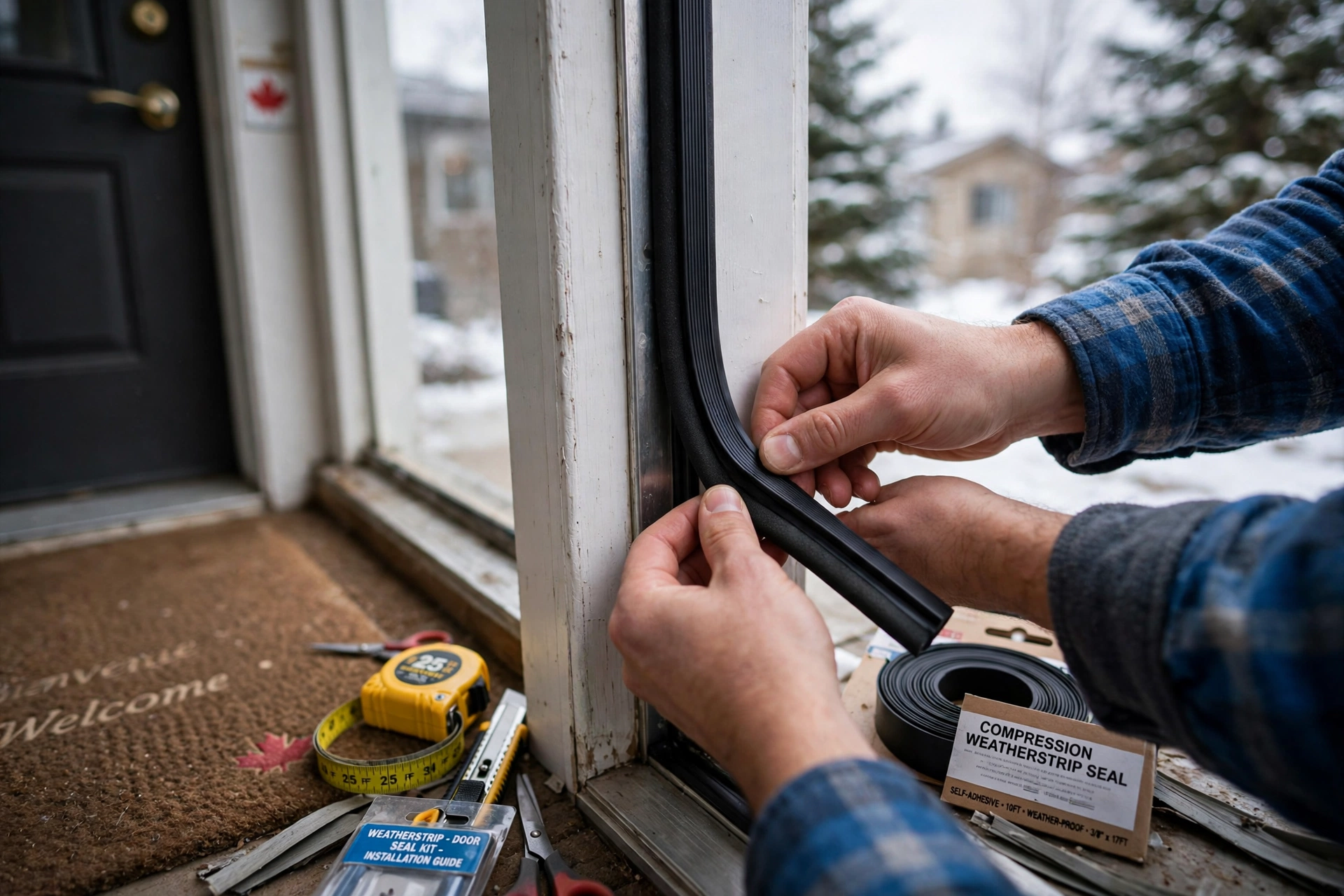
Weather stripping is the soft seal that closes the gap between a door and its frame. When it is in good shape, the door closes firmly, the latch clicks without a push, and no air moves around the edges. When it is worn, you get drafts, a door that rattles a little in the wind, and sometimes whistling on a gusty night.
A proper fix is not just sticking new foam tape over old foam tape. The old, flat material comes off, the surface is cleaned so the new seal actually sticks or sits properly, and the right type is fitted for that door — a compression seal for the sides and top where it suits the frame, and a sound sweep at the bottom that meets the threshold without dragging. Corners matter: most leaks live in the corners, where a rushed job leaves a small open triangle.
If your doors are due, see what a full weather stripping installation covers, and note which doors in your home need it most — front, garage entry, and patio doors usually come first.
A good test when the work is done: the paper test again. The sheet should resist when you pull it, all the way around. And on the next windy night, that slow hand check should find still air.
Caulking: The Fix for Windows and Frames That Let Water In Too
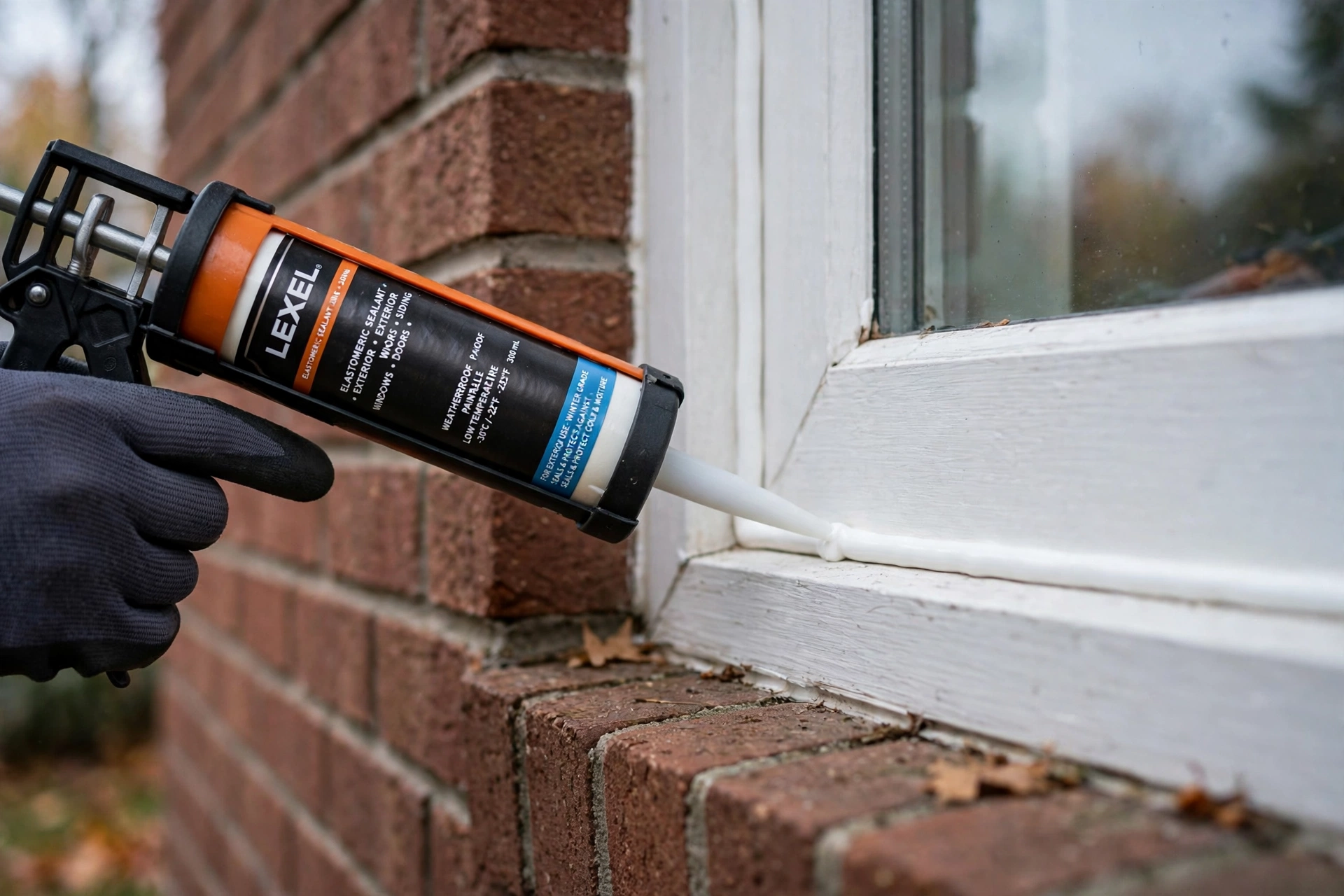
Caulking does two jobs at once. Around the outside of windows and door frames, it keeps wind-driven rain and meltwater out of the frame and wall, and it cuts the air leak at the edge of the frame. Inside, a sound bead around windows helps stop the warm, damp indoor air that causes condensation and, over time, damage to paint and trim.
Failed caulking is easy to spot once you look for it. It cracks in short lines, shrinks away from one side, or goes hard and separates when the house moves through freeze-thaw. Oakville winters are hard on it: a bead that is flexed in the cold, soaked in a thaw, and frozen again the next night will split sooner if it was already old or if the wrong product was used for an outside joint.
Fixing it properly means cutting out the failed sections — not beading fresh caulk over cracked old caulk — cleaning the joint, and laying a new, even bead that bonds to both sides. Inside, that also gives you a clean line to paint up to. Outside, it should be done while temperatures are still workable, which is another reason November, not January, is the time to book it.
For what is involved room by room and outside, see the caulking services page. If you are seeing cracked beads on several windows at once, that is normal for a house of this age — it is a whole-house walk and fix, not a sign that one window is uniquely bad.
One caution: caulking is a seal, not a patch for rotten wood or a damaged frame. If trim is soft, paint is bubbling from moisture inside the wood, or a window frame has moved, that needs to be looked at as a repair first, and sealed after.
What Affects the Cost — Without Guessing at a Price
Every home is quoted on its own details, so this post does not put a number on the work. What affects the cost is straightforward, and knowing it helps you get a clear quote:
- How many doors and windows need work, and how much of the old material has to come out first.
- Access — main-floor windows are simple; high two-storey windows and windows over a roof or a tight side yard take more time and care.
- Condition of the frames — sound frames are a seal job; soft or damaged trim adds a repair step.
- Inside, outside, or both — many homes need exterior caulking most urgently, with a few inside rooms added.
- Bundling — weather stripping, caulking, a door sweep, and a few small fixes done in one visit are more efficient than separate small trips.
If a room over the garage is part of the problem, say so when you call. It helps to check that garage-side door and those windows in the same visit, rather than discovering them later.
What to Do This Week
If you do the twenty-minute check and find one tired door seal, you may choose to handle that one yourself on a weekend — that is a reasonable small job with the right material for your door. If you find what most Glen Abbey and River Oaks homeowners find — several doors, a run of cracked exterior caulking, and a cold room over the garage — it is usually faster and cleaner to bundle it into one visit and have it done before the weather turns for good.
Lake Ontario cold does not wait for a convenient weekend, and exterior caulking gets harder to do well as temperatures drop. The homes that feel comfortable in January are, very often, the ones that got their seals checked in November.
Book a Winter-Prep Visit in Oakville
If your hand check found moving air around doors or windows, or your outside caulking is cracked and pulling away, call 289-207-6699 or send a message through the contact page to book a visit. Weather stripping, caulking, and the small draft fixes that go with them can be covered together, so your home is sealed before winter settles in.