
18August 2026
For most exterior entry doors in Oakville, high-quality EPDM or rubber compression weather stripping is my first choice. It stays flexible through Ontario winters, handles rain and snow, and usually lasts much longer than inexpensive adhesive-backed foam.
However, there is no single weather-stripping product that is best for every door. The right choice depends on the door design, frame condition, existing kerf or channel, threshold, door sweep and the size of the gap. A durable seal installed on a misaligned door will not solve the underlying problem.
Weather stripping creates a seal between the door and frame to reduce air leakage and help block rain, dust and insects. Common seal designs include compression seals, V-strips, sweeps, brush seals and magnetic seals.
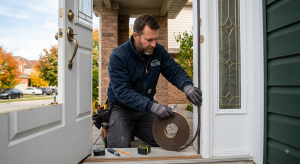
The Best Weather Stripping Materials
EPDM and rubber compression seals
EPDM and high-quality rubber compression gaskets are among my favourite options for exterior entry doors.
They work particularly well when the door and frame are still in reasonably good condition. As the door closes, the gasket compresses against the frame and creates a consistent seal around the sides and top.
I prefer these seals because they:
-
Stay flexible during cold Ontario weather.
-
Resist rain, snow and outdoor exposure.
-
Provide a professional-looking finished result.
-
Usually last longer than inexpensive foam.
-
Work well on frequently used exterior doors.
For an Oakville front door exposed to wind, rain, snow and freeze-thaw cycles, a quality rubber compression seal is usually a better long-term choice than simply applying several layers of foam tape.
Kerf-insert weather stripping
Kerf-insert seals are an excellent option when the door frame was designed to accept them. A kerf is a narrow groove or channel in the door jamb or stop where the weather-stripping insert fits.
The main advantage is that the seal is mechanically retained rather than depending entirely on adhesive. If the existing kerf is intact and the replacement profile matches, the repair can be clean, durable and relatively straightforward.
Kerf weather stripping is often available in rubber, vinyl or foam profiles. I usually prefer a quality rubber or vinyl insert for an exposed exterior door, but the correct profile is more important than choosing a material based only on its name.
Vinyl weather stripping
Vinyl seals can work very well on certain exterior doors, older doors and windows. They are affordable and can tolerate outdoor conditions reasonably well.
I find that high-quality rubber or EPDM generally stays more flexible over the long term, but vinyl is still a practical option when it matches the original door system or when the repair needs to remain budget-friendly.
Canada’s natural-resources guidance also identifies quality V-shaped vinyl weather stripping as an effective option for door frames because it can maintain contact even as a door changes slightly with seasonal movement.
Silicone seals
Silicone can be an excellent choice where flexibility and moisture resistance are important. However, I would not choose a silicone seal simply because silicone sounds more weather-resistant.
The profile must match the door and provide the correct amount of compression. A seal that is too thick can make the door difficult to close, prevent the latch from engaging or put unnecessary pressure on the hinges.
Door sweeps and bottom seals
The bottom of the door requires a different solution from the sides and top. Depending on the threshold and door design, I may install a door sweep, bottom seal or another purpose-built product.
This is one of the areas where I see many failed DIY repairs. A homeowner may attach thick adhesive foam along the bottom of the door, but the material gets dragged across the threshold, compressed by foot traffic and exposed to moisture. It eventually peels away or stops sealing properly.
A properly fitted door sweep is usually a much better solution. It should make light, even contact with the threshold without dragging so heavily that the door becomes difficult to operate.
The bottom seal is especially important because gaps there can allow drafts, insects, rainwater and cold air to enter. Natural Resources Canada notes that the door sill or threshold can be difficult to seal but is often a major source of drafts, so the material needs to be durable and flexible enough to handle traffic and seasonal movement.
Adhesive-backed foam
Adhesive-backed foam is inexpensive, easy to find and simple to install. It can be useful for:
-
A temporary repair.
-
A protected exterior door.
-
A small, straightforward gap.
-
A budget-conscious homeowner.
-
A door that is already square and closing correctly.
It is not usually my first choice for an exterior Oakville door directly exposed to wind, rain and snow. The adhesive can lose its grip, especially if the surface was not cleaned properly or the installation was done in very cold weather. The foam can also compress permanently and leave gaps.
I see adhesive foam fail most often when it is used as a permanent solution on a door that needs alignment or threshold repairs.
Felt and spring bronze
Felt is inexpensive, but I use it much less for exterior weather sealing. It may be suitable for certain interior or protected applications, but I would not normally choose it for a door exposed to Oakville’s winter conditions.
Spring bronze is a different situation. It is a traditional and durable material that can work very well on older wood doors. I particularly like it when the homeowner wants to preserve the character of an older Oakville home rather than install a modern rubber profile.
The installation is more involved, though. Spring bronze needs to be fitted correctly, and it is not something I would recommend as a casual DIY project unless the homeowner understands the door and frame construction.
Choosing Weather Stripping by Door Type
Exterior entry doors
Main exterior entry doors are the most common weather-stripping calls I receive. Homeowners usually notice a cold draft around the sides or bottom, see daylight around the frame or feel that one room is colder than the rest of the house.
For a conventional exterior entry door, I usually inspect the existing system first and then consider:
-
EPDM or rubber compression gaskets.
-
Matching kerf-insert seals.
-
Quality vinyl or V-shaped profiles.
-
A properly fitted door sweep.
-
Threshold adjustment if the bottom seal is not making contact.
The goal is not to install the thickest possible seal. The goal is to create even compression without affecting the way the door closes and latches.
Garage-to-house doors
Garage-to-house doors are often overlooked. Drafts from the garage can make the adjoining area feel cold, and gaps may also allow insects and unwanted air movement into the house.
I pay particular attention to:
-
The seal around the sides and top.
-
The bottom door sweep.
-
The threshold.
-
Whether the door closes and latches properly.
-
Gaps caused by hinge sag or frame movement.
If the bottom sweep is worn but the threshold is in good condition, replacing the sweep may solve the problem. If the sweep is not contacting the threshold evenly, an adjustment may be required before or along with the seal replacement.
Basement exterior doors
Basement doors often create several problems at once. Homeowners may notice cold air, dampness, insects or occasional water around the bottom of the door.
For these doors, I inspect the entire perimeter rather than focusing only on the most obvious gap. A cracked vinyl seal, deteriorated sweep, poorly adjusted threshold or open corner can all contribute to the problem.
Water should also be investigated carefully. Weather stripping may be part of the solution, but it is important to determine whether water is entering through the door seal, threshold, frame, exterior caulking or another location.
Patio and sliding doors
Sliding patio doors use a different type of weather-stripping system from most hinged entry doors. The seals are often built into the sliding-door assembly, and homeowners commonly report:
-
Drafts.
-
Condensation.
-
Dirt around the track.
-
Insects entering near the bottom.
-
Difficulty getting the door to close tightly.
Replacing the wrong strip or adding a generic adhesive product may interfere with the sliding action. The existing system, rollers, track and frame should be inspected before choosing a replacement seal.
Storm doors
Storm doors do not always need complete weather-stripping replacement. Sometimes only a worn bottom seal or damaged side section needs attention.
A storm door with deteriorated seals may allow wind and insects through and reduce the effectiveness of the main entry door. I inspect the storm door separately from the primary door so that the repair addresses the actual source of the leak.
Why Door Alignment Matters
One of the most important lessons I have learned is that weather stripping is not always the real problem.
A door may fail to seal because:
-
Hinges have loosened.
-
The door has dropped on the hinge side.
-
The frame has shifted.
-
The threshold is too low or incorrectly adjusted.
-
The door is warped.
-
The latch is not pulling the door evenly into the seal.
-
The existing seal is installed incorrectly.
-
The door has expanded or contracted through seasonal changes.
If the door is not square in the frame, a new seal may be crushed in one area and barely touch the door in another. It may appear to solve the problem temporarily, but the seal can fail prematurely.
A good weather-stripping repair is not simply sticking foam around a door. It involves making sure the door closes tightly and evenly against the seal.
Two Oakville Weather-Stripping Examples
A drafty front door in an older detached home
One Oakville homeowner contacted me about a noticeable draft around the main entrance door, especially on windy winter days. They had already tried adhesive-backed foam, but it kept peeling away and did not make much difference.
During the inspection, I found that the foam was not the main problem. The door had dropped slightly on the hinge side, so the compression seal was not making consistent contact with the frame. The bottom sweep was also worn out.
I took the following steps:
-
Adjusted the hinges.
-
Checked the door alignment and latch.
-
Removed the failed adhesive foam.
-
Installed a proper rubber compression gasket around the frame.
-
Installed a new door sweep.
-
Tested the seal around the entire perimeter.
Once the door was closing evenly, the new gasket compressed properly instead of being crushed in one area and barely touching in another.
The homeowner noticed the difference immediately. The draft was gone, the door felt tighter when closing and outside noise was reduced. If I had simply added another layer of foam, I probably would have been returning the following winter.
A cold and damp basement door
In another Oakville townhome, the homeowner was dealing with cold air, insects and occasional moisture around a basement exterior door.
The existing vinyl seal was cracked and permanently compressed, and the door sweep had deteriorated. I also found that the threshold was not providing enough contact with the sweep.
I replaced the worn seal with a better-quality exterior vinyl and rubber profile, installed a new sweep and adjusted the threshold. I also checked the corners because small gaps can easily be missed in those areas.
The repair held up much better than the previous DIY foam solution. The basement door stayed noticeably tighter through the following winter, and the homeowner no longer had the same draft and insect problem.
These jobs illustrate why I do not begin by asking, “What seal should I install?” I begin by asking, “Why is this door not sealing properly?”
How to Check a Drafty Door
Before buying weather stripping, homeowners can perform a basic inspection.
Look for daylight
Close the door from inside the home and inspect the sides, top and bottom. Daylight around the perimeter is a clear indication that there may be a gap, although it does not always tell you whether the seal or the door alignment is responsible.
Feel for drafts
On a windy or cold day, slowly move your hand around the door frame and threshold. Pay attention to corners and the area beneath the sweep.
A cold floor near the door may be the first sign that the bottom seal or threshold is not doing its job.
Test the seal with paper
Place a piece of paper between the closed door and the weather stripping at several locations. There should be some resistance when you pull it out.
Repeat the test around both sides and the top. If the paper slips out easily in one area but is tightly held in another, the door may not be aligned or the seal may not be compressing evenly.
Check how the door operates
A properly sealed door should still close, latch and lock without excessive force. If the door suddenly becomes difficult to close after new weather stripping is installed, the seal may be too thick or the door may require adjustment.
Do not solve a draft by adding more and more material. Excessive weather stripping can prevent the latch from engaging and place stress on the door hardware.
DIY or Hire a Handyman?
Weather stripping can be a reasonable DIY project when the door and frame are in good condition and the existing profile is easy to identify.
A homeowner may be comfortable handling a simple replacement when:
-
The door already closes and latches properly.
-
The frame is sound and not damaged.
-
The source of the draft is easy to identify.
-
The existing seal uses a straightforward replaceable profile.
-
The repair involves a basic sweep or insert replacement.
-
Measurements can be taken carefully.
Before installing adhesive-backed material, remove the old seal and clean the surface thoroughly. Dirt, moisture and old adhesive can cause the new product to peel prematurely. Natural Resources Canada also recommends correcting alignment, removing old material and ensuring that the door hardware operates correctly before completing the weather-stripping work.
I recommend calling an Oakville handyman when:
-
The door does not close squarely.
-
The hinges are loose or the door has sagged.
-
The frame is damaged or has shifted.
-
Water is entering around the door.
-
The threshold needs adjustment.
-
The door is warped or unusually old.
-
You are unsure which kerf or seal profile is required.
-
A new seal makes the door difficult to close or latch.
My general rule is simple: if the door works properly, weather stripping may be a good DIY project. If the door does not work properly, fix the door before replacing the weather stripping.
When to Inspect Your Door
Do not wait until the middle of an Oakville winter to discover that an exterior door is not sealing properly. Early fall is a good time to inspect the door before the heating season begins.
Look for:
-
Cracked, flattened or loose seals.
-
Peeling adhesive foam.
-
Daylight around the frame.
-
A worn or dragging door sweep.
-
Drafts around the threshold.
-
Water marks or moisture near the bottom.
-
A door that no longer closes or latches evenly.
A small worn seal is usually inexpensive to address. If drafts, moisture or water intrusion continue, the surrounding door, frame or interior materials may eventually require more extensive repairs.
My Recommendation for Oakville Homes
If I had to rank the options I commonly use on exterior doors, I would generally place them in this order:
-
Quality EPDM or rubber compression seals.
-
Properly fitted kerf-insert seals.
-
Good vinyl profiles.
-
Correctly installed door sweeps.
-
Adhesive-backed foam for simple, protected or temporary repairs.
-
Felt for limited interior or protected applications.
-
Spring bronze for suitable older wood doors where traditional appearance matters.
That ranking is only a starting point. The profile and fit matter just as much as the material.
In Oakville, I would rather install the right $30–$50 seal properly than install three layers of inexpensive foam and hope they stop the draft. A good repair should survive the next winter, not just make the homeowner feel better for a few weeks.
Need Help With a Drafty Door?
I work with homeowners in Oakville and the surrounding west GTA on exterior entry doors, basement doors, garage-to-house doors, patio doors and other common home-repair issues.
My process starts with an inspection. I check the door, frame, hinges, alignment, latch, existing weather stripping, threshold, sweep, corners and any visible gaps. If water is entering, I also try to determine where it is actually coming from before recommending a repair.
Sometimes the answer is simply a replacement seal. Other times, the door needs a hinge adjustment, latch adjustment or threshold correction. If the door or frame has deteriorated, I explain that rather than trying to hide a larger problem with new weather stripping.
If you can feel cold air, see daylight, notice water around the threshold or find that the door no longer closes tightly, have the door inspected before buying a collection of weather-stripping products. The right repair may be smaller—and more effective, than you expect.